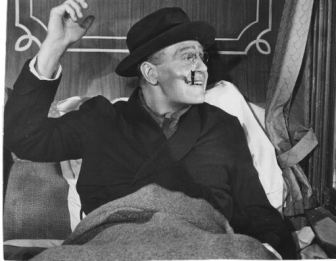
TO FONZ OR NOT TO FONZ. THAT WAS THE QUESTION.

I never, and I mean never, watch The Today Show or Good Morning America.

CBS and ESPN are my drugs of choice. But my husband left NBC on from the night before, and BAM. When I turned on the TV the next morning, . Henry Winkler !  His inviting face, that great, thick, white hair, and his warm smile made my lackluster morning warm to the touch. He transported me back to 1994.


—-

I had just moved to Cincinnati, Ohio with my husband and children. This LA Woman and transplanted New Yorker did not take kindly to the idea of the Midwest. I balked. I bellowed. I pushed my face to the glass of the jet as it took off out of LaGuardia in a thunderstorm. But tears of abandonment dried up in an instant as the Queen City came into view. It glittered in the dusk like a tiny jewel box.

“This looks like Downtown LA,” I said to my husband.

I had, in a back ass way, gone full circle – from Beverly HIlls’ Rodeo Drive to Cincinnati’s Burley Hills Drive.

For the first time, I felt at home. I dug into our gracious old colonial while my husband hit the corporate world. As an executive, he was expected to join many boards. He loved all of the organizations he supported, but he took a particular shining to his role at the Springer School – one of the finest primary schools in the country for children with learning disabilities.

In 2004, he suggested I help with the school’s fundraising committee. And, initially, I demurred. I’m just not a joiner. I was kicked out of the Brownies as a kid, I dissed the fifth grade Glee Club, and I gave the Junior League a valiant attempt, but the conservative, knee-length dresses and pearls. I’ve always been a proverbial stranger in a strange land.

But, I am also a champion for kids, and I too struggle with a bag full of learning issues. So I finally jumped into the event.

By the time I saddled up to the The Committee table that Fall, the ladies were already deep in the throes of planning the annual fundraising gala. One woman tossed out her wild idea to book Henry Winkler as the keynote. After all, he had just finished his children’s book series, Hank Zipzer, about a young boy with dyslexia.

My Hollywood wheels began to spin.

“I can get Winkler,” I blurted. All ears perked up.

It was bold move. I didn’t know him. I’d never met him. I’d just watched him on TV same as everyone else. But I had chutzpah.

“HOW?” They all seemed to say with their eyes.

“I’ll find out who is agent is.”

What the hell had I just done?  Promised magic I couldn’t produce?

I raced home feeling simultaneously high and low. Why did I have to go strutting my, “I’m from Beverly Hills. I’m connected,” stuff with these nice women? I had to deliver.

So I ran upstairs and googled Winker’s talent agency. Bingo. His number popped up, and I dialed the digits. I’d worked in and around the biz long enough to know I ‘give good phone.’ So when an assistant picked up, I went into my rap. Within a minute, she connected me to his speaking agent. I managed to break her rough ice, spill the particulars of the school and event, and cordially invite him to share his story. Then I held my breath.

“Mr. Winkler would be honored. But if you mention, advertise or display ‘The Fonz’ or ‘Happy Days’ during the event, he will not come.”

AGREED.

I. Was. Elated. Success had a five-star ring to it.

Henry arrived for his big day on a bone chilling mid-March morning. Arrangements had been made for him to stay at the Hilton Netherland Hotel, where the event would also be held. I greeted his limo, and we exchanged huge smiles. We raced up to his room, hung up his suit for the evening and jumped back in the car to meet the children waiting to greet him.

Talk about a warm reception. It was deafening. Kids filled the indoor gym, clutching their copies of Hank Zipzer. They’d all read more than one in the series, word-for-word. They screamed. And yelled. And exploded with such joy, Henry was simply bowled over. He stood amongst them, quieted their squealing and began to speak. I have rarely been in the presence of an actor, or a man, who was as genuine and captivated with children. I literally had to drag him out of the room, to make it to the fundraiser. I was more than sure he would have stayed and hung out there all night if I let him.

At 6 PM, a record 450 guests began to arrive. The Hall of Mirrors was set. HERE’S TO HENRY was about to begin. Henry took his seat next to me, and he barely said a word throughout dinner. He simply watched and listened as guests chattered over other speakers. At one point, henry turned to me, held my arm and whispered, “are they going to be this rude with me too?”

As guests finished dessert, Henry stepped on stage and silenced the crowd. For forty minutes, no one so much as sneezed as he delivered a breathtaking event without a note. Or teleprompter. Or a prepared speech. Most of the audience was not aware, nor was I, of his own learning disabilities. That’s what inspired him to write the Hank Zipper series. But not before struggling through school to eventually graduate from Yale.

Did he speak of the Fonz? Not once. Or Happy Days? No way.

He simply looked out at the crowd, took a deep breath and said, “Thank you for listening, my parents never did.”

Before he left to catch his redeye back to L.A., Henry waded through the crowd to say goodbye. He couldn’t get a word in before I hugged him.

“Thank YOU. My parents didn’t listen either.”

And thank you, Hoda and Kathie Lee, for taking me back.

But I’ll be returning to my regularly scheduled programming tomorrow morning.

I NEVER CRIED FOR MY FATHER

My father’s 737 jet out of Hong Kong had already been delayed for three hours due to bad weather. But that didn’t seem to bother him much. He just smiled and relaxed into his chair a row behind his film crew. Another hour passed on the tarmac. And then the jet spread her wings and climbed into the heavens.  

Shortly into the flight, his cameraman heard a loud snore. He wondered from where it came. He turned and saw my dad, his producer and director, gasping for air. A steward rushed back with oxygen. It was no use. He struggled a few minutes, and then he was gone.

Carl Ward Dudley, a man born on his father’s Vaudevillian show train in Little Rock, Arkansas, creator of more than 300 travelogues, died on yet another exotic excursion. Damned if he didn’t write the final scene himself.  


6 AM.  Beverly Hills. The phone rang in our Rodeo Drive kitchen.    

At 21, I just happened to be home and sleeping in the downstairs bedroom. After all, it was fun to indulge in the occasional dinner and overnight. But cushy and rent-free as my parents’ home may have been, I had moved out at 19 despite my father’s misgivings, and I had no plan of moving back in.

The man had absolutely no faith that I could stand on my own, and I’d been determined to prove him wrong.  

“You will never get a loan to buy your own car, get a job, or pay your own rent!”  he shouted as I left.

But, defiant as I am, I trumped all three. I got a VW loan for $32.60 a month, worked in the ‘rag’ garment business in downtown L.A., and found a $90 apartment above a Laurel Canyon garage.  It leaned to one side, but I was in my cups; even more so as I proudly walked my father around the place during his one and only visit.

“Jennifer, this place is pretty nice.”

Clearly it was a dump, but it was all mine. And his validation meant that, maybe, for once, in his eyes, I had done something right. He always paid more negative attention toward me than my five sisters. Barking at me was a sport. “KNUCKLEHEAD, can’t you do it right?,” “stand up straight,” and “get back in your room and stay there until I tell you to come out.”  I’m sure he had a gold medal in bullying. These rare, loving pats on the head were hard-won, and I reveled in them.

So it was fate that I, his most mercurial child, would be the one to hear the news first.


Early morning light streamed through the bedroom’s soft white curtains. Our nasty cocker spaniel, Keo, sprawled at the bottom of my bed. He always passed wind.

Eck. Not again,I said as I pushed him off, walked into the kitchen, and pushed the first line button blinking on the phone.

Hello?”  

“Jennifer, it’s Barb.” My father’s film editor. He always said women were the finest cutters.  “Your father died from a heart attack on a plane in Hong Kong.”

I stood numb and naked in bikini underwear.

“Thank you, Barb. I am not being rude, but I have to tell my mother. I will get back with you.” My tone never wavered.

Just before I hung up, I heard another soft voice on the line, and I knew exactly who it was. I threw on a T-shirt, rushed up the stairs to my parents’ master bedroom, and opened the door. Carefully. Quietly.

My mother stood silently in the middle of the room.  

“Mom. I am so sorry.”  

She went to the window, opened the drapes and, for the first and only time in my life, I heard her wail.

“DUKE, I AM SORRY I WAS NOT WITH YOU.”  

She turned to me. I hugged her. And then I let loose with my usual sarcasm.

“Ma. I feel badly, but if there is a heaven, I hope he and I don’t end up in the same place. I can’t imagine being screamed at for eternity. That would be hell!”  

She smiled.  I suggested I let her children know. I have five sisters. Only one still lived at home.  She agreed, turned, and went back to her bed. This time on my father’s side.

I walked down the hall and entered the open door to my youngest sister’s room.

She was just out of high school. Very creative. A budding photographer and a songstress. We were never on the same page. I, the too emotional sister. And she, the more controlled, placid and sweet.

That morning was no different. She was sleeping on her back. Blanket and top sheet up to her neck. Headphones on. Plugged into one of her favorite albums. I shook her gently. No movement. Gently again. She looked up, eyes wide, as she removed her phones.  

“Dad died.”  

A tsunami of silence rolled off of her. She grabbed me around the neck so tightly I thought I would choke. And then she began to sob. A primal sob.

I left the room and called Betty, our nanny of many years, who was working with another family a few blocks away. I knew she would be a huge support. True to her heartwarming form, Betty arrived within a half hour, put her arms around my sister, and sat next to her in our back den. And there she stayed for days.  

Then, I called my four adult sisters, scattered across the country. One was living in Rome. Each familiar voice cried through seeming shock, despite the fact that this was Dad’s fourth heart attack. We really believed our zestful, tall, trim, louder-than-life father was unstoppable. He always survived. He always came back. Not this time.  


Just last week, I received a package from my eldest sister. A handsome tanned leather folder. My father’s gold plated initials, CWD, commanded the bottom right corner.

A collection of flowery, loving letters spilled out. He’d carefully written each one to his mother during his freshman year at Grinnell College. I never met the woman, but I heard he felt similarly about her as he did me – he didn’t “particularly like” her.

Somehow, this young Carl, pouring out his heart and desires for the future, chipped away at my years of anger and resentment toward him.   

But nothing could have prepared me for the three sheets of typewritten paper I picked up next.

It was an elegant letter written by Ed Drews, my father’s cameraman, who was on the plane the day my father died. He addressed the note to my dad’s close friends, the actor Ralph Bellamy and his wife.

The first few paragraphs described the evening before my dad died. I already knew most of those details – dining on the patio of the Peninsula Hotel overlooking Kowloon Harbor.  Breakfast in the elegant hotel dining room before collecting his bags to board his final flight.   

But then the letter shifted, somewhat unexpectedly, into darker details of my father’s heart attack. Facts I’d never known. My feet paced around the room as I read, until I reached the last page. I fell into a chair.

My dad’s last words appeared, carved into the pulp of the delicate paper.

“How lucky we are to get away,” he said as he stared straight ahead into the void.

I froze. My gut stiffened. I couldn’t feel my legs. My breath caught in my throat.   

The tears I never cried were too powerful to hold.

MY DATE WITH MR. STILLS

“Do you mind if I move up front?  My hearing is shot.”

With that, Stephen Stills moved to the first row of the theatre. But not before he touched my hand and whispered, “I’m sorry.”

The year was 1975. I was in my early twenties and living in a five floor walk-up on Madison Ave between 67th & 68th St. It was two-bedroom designer floor-through, completely furnished with Knoll furniture. My portion of rent was $175, and my ‘roommate’ was a handsome, much older, Knoll executive. He was a friend of our family who had a wife and three boys in Greenwich. When he said he’d spend two nights a week in the apartment, it didn’t take long before a romance began.

With the freedom to date while my lover played husband in Connecticut, I received a call from a girlfriend in LA. Did I want to join her, her boyfriend and Stephen Stills the following week to see a Broadway Show?  Of course. Broadway? Yes. A chance to meet one of the most talented singers, guitarists and songwriters ever? Yes. Crosby, Stills, Nash & Young? Yes. A spokesman for my 60’s generation? Yes. Suite to Judy Blue Eyes? Yes. Yes. Yes.

When the big night arrived, I stood, unnerved, outside my apartment. A black stretch limo stopped in front of me just as I double checked my carefully dried long auburn hair. The chauffeur walked around and opened the back passenger door. Stephen got out and introduced himself. I thought he’d be taller. His hair was beginning to thin, but he was very attractive.  I ducked my head, slid into the back seat and launched into my usual chatty, direct conversation style. But Stephen had an aura of calm I couldn’t overpower. His presence took my speedometer from 100 to a smooth 15MPH.  He was shy. I felt the same. He was gentle and kind. I felt the same.

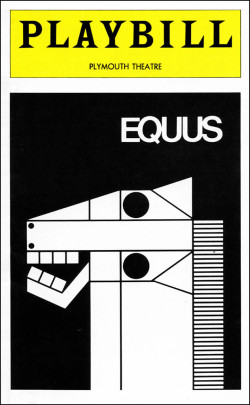
After maneuvering crosstown traffic to Broadway, we entered one of the Schubert theatres to see the Tony Award-winning play, Equus. We mingled with the large crowd, and it was obvious people recognized him. A few would begin to approach, but his demeanor was so polite, they all turned back. Stephen was not in the least impressed with himself. He held no airs of celebrity or status.

At 8 pm sharp, the curtain went up. And at 8:10, Stephen made the move to the very front row. But not before apologizing for leaving me. Years of concerts had left him hearing impaired.

EQQUS

After the show, we cruised around in the limo while my friends blew cocaine up their noses. Rumor had it Stephen was a heavy drug user. And, perhaps because I passed on the snow that night, he did too.

I had forgotten about my lovely night with Mr. Stills until recently, when I saw a story about an upcoming Judy Collins/Stephen Stills tour. I imagine Stephen doesn’t recall me at all.  But in case he does, I’d like to say:

The young lady in 16th row with the empty seat next to her thanks you for a very fine evening. You will always be music in my ears.


Shall We Dance?

Can a five-year-old fall in love?  I did. With Yul Brynner.

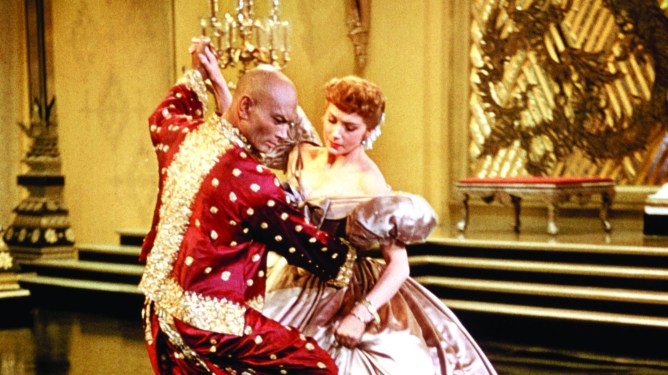
It was 1956, and he was the lead in The King and I. I was a giddy kindergartener promised an afternoon adventure to see his film. My first. It was the beginning of a very short crush on Brynner and a lifetime romance with the world of cinema.

I couldn’t sleep the night before. As a very curious, anxious and imaginative child, I was just too excited. I got out of bed and wiggled my way into conversation with Betty, my nanny. She put me back under the covers.  Again. I escaped. Finally, her firm hand insisted, “if one more time,” I was not going anywhere other than my room. With a lullaby and goodnight kiss, I slipped into the abyss. Her threat did the trick.

I awoke to the usual Beverly Hills sunshine. It was going to be a magical day. I ran to my parents’ bedroom, knocked twice, (a rule) and heard my mother’s soft voice invite me in. She smiled as I gave her a hug and a kiss. She was beautiful. And not just to me. Sprinkles of premature silver tinged her midnight black hair, and her cheek bones popped like Katherine Hepburn. ‘Elegant’ was too simple a word to describe her presence.

My father, The Duke, sat up in bed. He had broad shoulders and a bald, distinctive head. His piercing blue eyes hid behind dark rimmed glasses. I considered him intimidating and very old, but at the time he was only 46 –  a young, vigorous, director and producer.

I got on the bed and snuggled between them. They told me of the Broadway show of The King and I, and some of the plot. I was too excited to listen.  Good thing, for the mystery of the day would have been ruined.

My mother slipped me into a petty coat and pulled a white dress with green embroidery over my long, curly red hair.  In that moment, and not many others, I felt pretty. And, better yet, it was going to be my day. No sisters. Just me, my mom and her friend, Sinny.

Sinny was the wife of a well-known athlete. I didn’t like him. Even at five, I remember thinking he was creepy. But she was a masterpiece. Tall, tanned, and chic with a thick mane of chestnut hair and a huge blond streak right in front. She always wore a light air of Chanel Number 5. No surprise, today I do too.

We three got into the Ford Station wagon and headed toward Sunset Boulevard. We turned left on Fountain Avenue and onto Hollywood Boulevard, straight to the famous Grauman’s Chinese Theatre. It looked like a pagoda trimmed in red and gold.  The pavement out front shimmered with famous people’s feet and handprints.  I stopped at each one to see if my tiny ones filled any. But they only fit in Shirley Temple’s. My smile began to hurt.

“Come on, Miss Jenn.” My mom echoed. “It’s time to go inside.”

I ran between my wonderful companions and held their hands as they swung me through the doors of the theatre. Nothing could have prepared me for the opulence. I stared way up.  So far back my neck ached. The ceiling reached a thousand feet high. Serpents and exotic animals danced across it.

We made our way down the aisle and took our seats right near the front. The lights dimmed. The audience hushed. The heavy, burgundy curtains open slowly to reveal a gigantic white screen. The Twentieth Century Fox Logo came up. Then, my mouth agape, The King and I rolled.

thekingandi

I sat on the tip of my seat and held my breath until the last scene. The music, the costumes, the children, his majesty. And Anna with, just like me, red hair! No one could have prepared me for the ending: The King, lying on his bed with his servants, children, Anna and her son by his side to say goodbye. Why? I couldn’t understand. Then, he closed his eyes and died. People die? Why was I being subjected to this? I sobbed.  I couldn’t stop. I believed it was real. Too real. My mother tenderly assured me otherwise. It didn’t stop my tears.

We walked back to the parking lot. My freckled face was a crater of devastation. I fell asleep in the backseat fantasizing about The King’s outstretched hand – to reach, to touch  and lock with mine. To hold me in his strong arms and say, “Little one, shall we dance?”

Hiding In the Glass Closet

Recently, a childhood friend asked me to tell her ‘story.’

I politely told her to tell it herself.

But then I got to thinking.

It’s my story too. Written on my soul just as it was written on her skin.

So, here it is. For better. Never again for worse.


I can still see the pink and white flowers on your beautiful canopy bed, as we played Chutes and Ladders. And then, I hear her. No. I feel her. Reverberate right through me.

“TORRRRRRRRRRRRI!”

It’s a screeching, southern drawl.

I knew what was about to happen. Again.

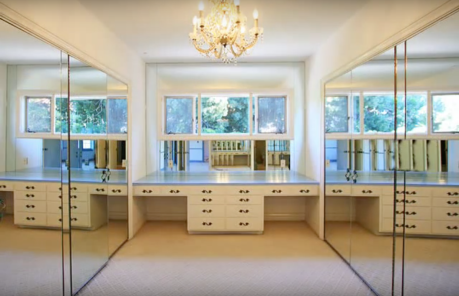
In one swift motion, I leapt off the bed and disappeared into her dressing room. It had at least ten closets with floor to ceiling mirrors.  I shook violently as I flung one open and prayed to disappear. Instead I heard her, the woman you wistfully called ‘mother,’ violently grab you.

I stood.  Erect. Feet together. Immobile. Holding my breath. Not a sound. For fear she would discover me while she wailed. There was nothing left to my childish imagination. Every blow crushed your tiny body.

Screen Shot 2017-05-08 at 4.23.07 PM

The glass closets

There was no one like your mother. Not in Beverly Hills. And certainly not in the 50s or 60s. She was a small town girl from backwoods Arkansas who set her heart on heading west. And, boy did she ever. In short order, she married a man with a booming business, exploded into wealth, and garnered all the trappings to transform from Alicia June to The Diva.

She was a magnificent beauty.  All her pieces fit.  A petite woman with a slim waist, just right perky breasts, and tiny, perpetually high-heeled feet. Imelda Marcos would have drooled at her shoe collection. All of her closets overflowed with designer clothes, jeweled evening gowns and furs of every length. There was no end to the extravagance.

But her most prized feature was her hair. Teased to the hilt, and dyed fiery red to mask her original, mousy brown color. There’s no doubt that my long, natural red locks unlocked her love for me and the door to her beauty salon at the Beverly Hills Hotel.

One afternoon, she drove us there to steal my hair color. We cruised the curves of the hotel driveway in the back of her eggshell blue Cadillac, ‘DIVA’ proudly displayed on the plates. I grabbed your hand to keep up as we navigated through the long entrance to the lobby, past the famous Polo Lounge, down the stairs, left by the Fountain Coffee shop, and into the salon.

But she didn’t just enter that room. She General Electricified it. After she “DAHLLINGED” the whole staff, she immediately threw her arms around the famous Henri. He, in turn, ran his fingers into my ‘pure’ hair – the inspiration color for his demanding client.

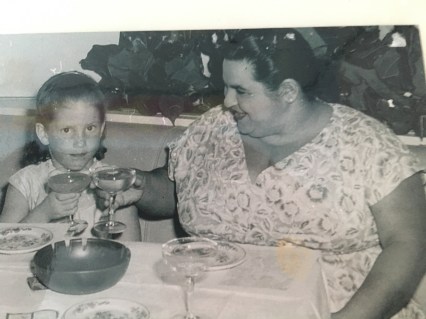
There was an upside to these adventures, though. We were always treated to our own hairdos. And treated we were. Like princesses. We put on pink cotton smocks over our party dresses. (The Diva never allowed us to wear play clothes out with her). Each of us had a personal hair washer. Afterwards we sat side-by-side under giant hairdryers – the kind that go too hot around your ears.  And then we got styled. It was always the same: a simple chignon bun, mais oui.

FullSizeRender

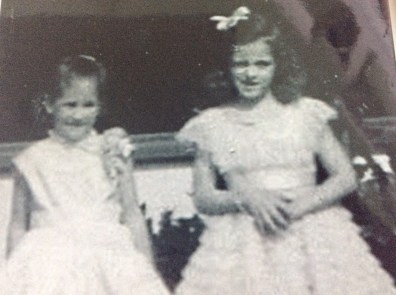
Us. Pre-hairstyles.

When we got back to the house, Diva would dress us up like ballerinas. Tutus, leotards, tights, the works. Always.  Then a professional would photograph us. I still have one of the prints hanging in my home. I treasure it, but it makes me tremble. There we are. Perfectly frozen in first position.  Slight smiles.

I remember your siblings as older, beautiful, handsome and distant. Both emotionally and physically.  There was a houseman, or a chauffeur, or maybe a man-in-waiting? I never understood his role.  But his name was Sanford, and his suit was as stern and dark as his face. I never got a smile out of him, and I never saw him say a kind word to you except to warn you to steer clear of your mother.  He rotated from the carport to the kitchen. I didn’t like him at all.  The only bright spots in the house were two German cooks worth their weight in five stars. There wasn’t anything they couldn’t whip up, from grilled cheese to goulash to the most spectacular, melt-in-your-mouth macaroons with chocolate chips.

Your father, Edgar, was the soft, passive moon to Diva’s explosive sun – quiet, bald, tanned, and trim. At six-feet-five, he towered over everyone. Diva proudly converted to his Judaism, and the family observed each High Holiday. I was invited to some, and I loved learning to light the menorah candles. There was joy around that table. But it mixed with the anticipation of Diva’s next outburst. Like tiptoeing on gorgeous, faberge eggs.

I was subjected to the same panic. From my father. He chose words as his weapon.

I was spared the rod, but I was not spoiled with love. My father, the Duke, took one look into my sensitive, anxious, needy eyes, and he knew he found the perfect target to bully. He seemed to take pleasure in screaming at me. He knew it hurt when he took his forefinger to his thumb, flicked it by the side of my head and called me “knucklehead.”  But he never stopped. He was always there to demean and shame me.

We tried to escape. You ducked into the imaginary world of animals, where your favorite teddy bear lived and your prized collection of Breyer horses roamed free.  We played pretend with your white stallion and my thoroughbred. As for me, I attempted to vanish into the welcoming arms, and gigantic breasts, of my nanny. Thank God for her. But where were your father and my mother hiding? Why didn’t they stop the madness? Their silence was deafening.

FullSizeRender (2)

My favorite escape. Betty the Nanny.

We were victims of a smorgasbord of undiagnosed mental disturbances – anxiety, depression, mania, the whole enchilada with peppers. And those viruses were contagious. We came down with the same genetic flu, but somehow both of us clawed our way out of depression and panic disorder, over and over again. We hurt others, and ourselves, as we struggled to cope. There’s no denying that. But somehow, we still found a way to see the light. I’ll never forget the day you overdosed on your medication and doctors pumped your stomach.  We heard the click-clack of Diva’s heels coming down the hospital corridor.

“TORRRRRRRRRRRRI!” she screamed. It was always the same.

You turned over and smiled. “Oh shit. Why didn’t I die?”

Your sense of humor has always been unflappable.

The other day, we spoke on the phone.  A real phone with a cord and a dial tone. Because neither of us dare succumb to the digital world. I waxed nostalgic about returning to simpler time with rotary phones. You said that reminded you of Diva’s special pen with a feathered plumb. She used it to turn the dial on her phone.

“Because, you know, Jennifer. She couldn’t ruin one of her perfectly manicured nails.”

We laughed at the same time.

Just the way we did on your beautiful canopy bed.

The Most Beautiful Boy in the World

He shot himself in the head. That was the first thing I heard. I squirmed. Couldn’t imagine. Didn’t want to.

The New York Times and Hollywood Reporter reported a different story. A suicide by pill overdose. Asleep. In his pajamas. Thank God.

Finally. His battered soul was free.  Henry Louis Jourdan, my beloved friend, dead at 29.


Louie and I were buddies from the start.  We met in Kindergarten at Hawthorne School on Rexford Drive in Beverly Hills. I was an anxious little girl with a patch on my left eye to strengthen the right. It was crossed. Add some frizzy red hair, freckles, and stick thin legs, and you had anything but a candidate for a cute kids contest.

I held my mother’s hand, walked into the large unfamiliar room, and immediately felt better – Mrs. Wilber, a heavy woman, with a soft, open face came over to say hello. My first teacher. She made me feel safe and eased some of my tension.

Every Kindergarten student arrived with a blanket. There were mats for nap time. Blue for boys and pink for girls. Naturally, mine was yellow. The one who never fits in.  Unique.  A misfit. Troublemaker extraordinaire.  Or, as my mother used to say: “Jenn, you are a caution.” You know it. Look out.

Mrs. Wilber asked us to find a new friend.  I saw a little boy across the room. He sat ever so still with his hands at his side. He looked like an angel. I approached gently.

“Hi. I’m Jennifer.”

“My name is Louie,” he said with a hint of French accent. And with that, we were fast friends.

Louie and I were Catholic in a predominately Jewish school. On major Jewish holidays, the school remained open, and Louie and I were one of the few who showed up. We had fun pretending we had the whole place to ourselves. Because we did.

Both of our families attended the Good Shepard Church on Little Santa Monica.  My mother would troop in with her six daughters every Sunday for 9 a.m. mass.  Louie was always there. He and his famous actor father, Louis Jourdan, and his lovely, petite French mother, drew admiring looks. Despite a congregation filled with the notably famous, they were outstanding. At least in my mind.

After mass, Louis and I headed for the social hall to prepare for First Holy Communion. We sat in a circle on a hard wood floor with our legs crossed and hands in our laps, while a nun gave instruction. Once in a while Monsignor Sullivan would check in to see how we were “coming along.”  He was a cold, mean, son of a bitch. But Sullivan didn’t scare Louie or me. Not one bit.  We giggled. He scolded. The more trouble we got in, the more infectious our laughter.  Once, both of us wet our pants. Despite our devilish behavior, Louie and I were approved for the Big Day. But not before we had our first confession. Because, as you know, second graders are riddled with sin.

I had no idea what to confess. The evil Monsignor slid open the screen in the tiny, dark confessional. You could make out a bit of his silhouette. This is the stuff of actual nightmares. I gathered my courage.

“Bless me father, for I have sinned.” And then I blurted, “I’ve committed adultery.”

Instead of the man taking it in stride, or humor, he outlined the mother of all penance: Stations of the Cross and three rosaries.  I had no idea what sin I had committed and no one filled me in.

Me. A 7-year-old adulteress. It had a pretty nice ring to it.

I was absolved just in time to join the parade of boys and girls for our First Communion. We weaved around the Church sidewalk in two straight lines. The girls were visions in white from head to toe: veils, fancy dresses, patent shoes, rolled down silk socks, and gloves. We were led to believe we were Brides of Christ.  Indoctrination never smelled as sweet, because as we walked slowly up the sides of the marble aisle, Louie was my partner. They were supposed to be Grooms of Christ. Instead, I pretended Louie was mine.

Louie and I enjoyed five more years hanging out on the Hawthorne playground before my family had to move to Westwood. My father was in some trouble with his film business, and the elegant house on Heather Road off Coldwater Canyon had to go. I was pissed. By then, I was running with Louie’s clique, which included Danny Attias, Bobby Gersh and Lon Levin. I had tight girlfriends, Debbie, Laurie and Victoria. And I had an I.D. bracelet from Mike Sheridan. (I heard he too overdosed.)

But, by some turn of luck, I actually liked our new house and my new school at St. Paul the Apostle.  I made friends quickly. Fenny was my best friend, followed closely by Cassie Murphy and Laura Setterholm. One of my new classmates, Mark Harmon, went on to fame far beyond, I am sure, his expectations. And he was as genuine and handsome then as now.  I also found a new boyfriend – Paul Palmer. He got a St. Christopher Medal instead of an I.D. bracelet. What I lacked in looks I made up for in personality.

Louie and I continued to see each other when I was invited back to Hawthorne parties. I thought I was so cool – smoking Newports, wearing white erase on my lips, sporting miniskirts and making out.  But not with Louie.  We were tethered by something finer and more intense.

The most beautiful boy in the world

It wasn’t until High School that we separated.  I to Marymount High School. He to Beverly High.  We both got lost in our diverse worlds. Especially Louie.

After graduation, I heard through the gossip line that Louie had gotten into psychedelics, uppers, downers and heavy drinking. A friend asked me to go to Louie’s house and speak with his father. Help Louie get some help.

I knew what I was up against. Louie’s dad was mean, cold and unforgiving with his son. Louie confided, and I kept his trust, that he had a three-year-old sister who died when he was five. The family never spoke of her, and I believe he bore the full brunt of that tragedy.

Mr. Jourdan opened the door to their Crescent Drive home.

“Mr. Jourdan. We would like to see Louie.”

“Of course,” he responded with his perfect French, affected accent. I sensed reticence, arrogance and anger.

Louie came down the stairs loaded. We suggested they sit while we remained standing. I told them I would like to go with Louie to the Manhattan Project  – a youth addiction center in Pasadena. Mr. Jourdan lost it.

“NO. There is nothing wrong with Louie. Please leave.”

big and little louis

I didn’t know the French for ‘denial,’ but I did know ‘fuck you’ in three different languages. Despite that, I held back.

Louie phoned me later that day. I invited him to our home for dinner. By then, we’d moved back to Beverly Hills. Despite knowing our family well, he sat in silence and didn’t say a word.  Admittedly, getting one in at the boisterous Dudley table was rough going. But, after the dishes were cleared, we went into the little den. He agreed to go with me to a meeting.  A first step. Or so I thought.

A few evenings later, Louie held my hand tightly as we walked into the building and into the main room. We sat down on a wood floor with our legs crossed like we had so many years before at church. The group began to share stories of drugs, LSD trips, heroin binges, booze and arrests – the gamut. He never moved or spoke. Tears fell. From his eyes and mine.

We left just as we came. In silence. He wanted me to drop him off at a phone booth close to Beverly Drive and little Santa Monica. I figured he was going to connect and score. I had no more control than he did. I got out of the car and hugged him until my arms ached. I figured it would be the last time.

But ten years later, as I was walking alone down the shopping district of Beverly Hills, I stopped by 308 Rodeo Drive where my father’s company, Dudley Pictures LTD, used to be.  I let the memories take up some time in my head, and then I J-walked back to the other side. Peering into a shop window, I saw a refection behind me. A tall man. Dirty, disheveled. Greasy hair with bandana. In a long black coat.

I moved toward him and looked down.  He was barefooted, toes invisible with filth. His eyes were  dark and empty.

“Jennifer, it’s Louie.”

I was numbed.  Words were lost. I stumbled awkwardly toward him, held his hand, and gave him a kiss. He kissed me too.

It was 1981.  A month later. He would be dead.

It took me a full year to find the courage and send his parents a letter.  It was about my love and loss. I referred to him as here:  The Most Beautiful Boy in the World.

It was returned unopened.


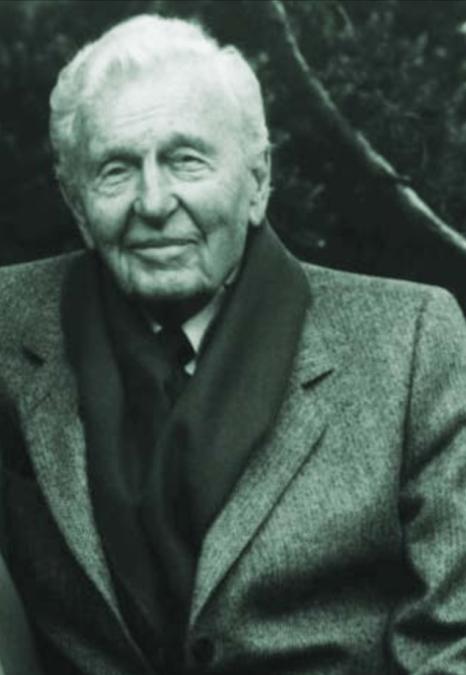
Is there a Doctor, a President, or a Ralph in the House?

I wasn’t starstruck. I was thunderstruck the moment Ralph Bellamy opened the door. 

My father rang the bell. I stood back with my mother.  They were close with the Bellamys, and I was invited to join for dinner. I was 14.  A first meeting, if you will.

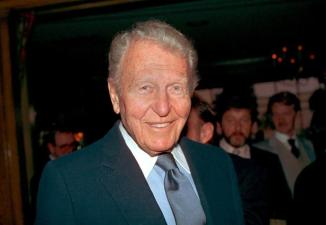
There he stood, six foot plus. Tanned and trim. Linen pants, a soft colored pastel sweater, and white Gucci shoes. I can’t stand white shoes, but on him the gold buckle glistened on his sockless, browned feet. I was speechless. And that was a first.RALPH BELLAMY

I extended my hand.

“Stop that nonsense,” he implored in his deep-throated voice as he hugged me. I returned it. Big time.

My father never hugged me. Not once.  So, in Ralph’s arms I instantly felt safe and accepted.  I had a teenage crush on an older man.  It endured from that moment until his last.

I cannot count the times Ralph and I sat together in his comfy den while I listened to his stories of film, Broadway and a cast of those he worked with and admired.   They were legends.  Spencer Tracy, Cary Grant, Rosalind Russell, Lucille Ball, and his best friend, James Cagney.  Although he was a confirmed and devoted Democrat – he even had a handsome framed photo with JFK on the wall – he praised his fellow actor and POTUS, Ronald Reagan. I asked if he had voted for him.

“I never reveal my votes.”  And that was that.

A girlfriend asked me if Ralph was as gentile as the wealthy scion he played in Pretty Woman.  I assured her, yep – and so much more.

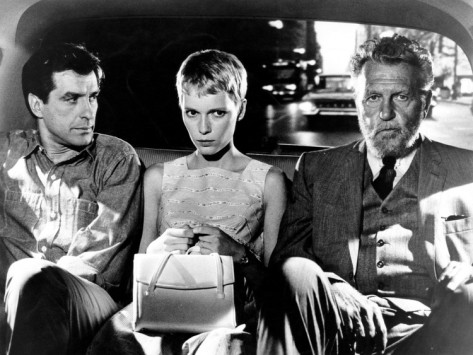
“Then how could he be so convincingly evil as the Doctor Saperstein in Rosemary’s baby?”rosemary-s-baby-john-cassavetes-mia-farrow-ralph-bellamy-1968

I recalled a story my father relayed.

“When Darryl Zanuck was studio head of 20th Century Fox, he kept on his desk, under glass, the names of a select few actors that were so versatile and talented they could take on any role.  Ralph was one of those players.”

There was no doubt. In fact, after his role as Roosevelt in Sunrise at Campobello, I began to address him as Mr. R because he was so convincing.  He feigned annoyance.Bellamy Sunrise at Campobello

Ralph always said he wouldn’t have been half as successful without his dynamic wife, Alice. She was a force of nature, and I simply adored her. Her salt and pepper hair was always pulled into a tight bun around her tiny, handsome face. She once told me the trick to her flawless skin, but sadly, I forgot. She had a deep, gravelly voice, and her sense of humor paled only to her warmth and devilish grin.

It was she, on a cold November in 1991, who phoned me.  By then, I was married and living in Chappaqua, New York with my husband and children.

“Jennifer. Ralph is very sick in St John’s Hospital.”

I hung up, made a reservation and flew West.

When I arrived in his room, Alice looked up at me.

“He’s dying, Jenn.”

There he was.  Statue-like, but faintly tanned. Still Ralph. There was a male nurse sitting by his bedside.

“He hasn’t spoken or recognized anyone in days,” the nurse whispered.

I moved closer, and touched his hand. He stirred, and opened his powder blue eyes.

“Jennifer. You’re here.”

Startled, I managed one simple phrase: “I love you, Ralph.”

Before I left, Alice asked me to deliver a eulogy. I was flattered and humbly agreed.

That evening, Ralph Rexford Bellamy, 87, closed his eyes for the last time.

I felt numb and ill-equipped to write about a man who meant the world to me.  So, in a moment of anxiety, I phoned Alice and reneged.  She was not pleased and even attempted to dissuade me. Despite my radio career, I was intimidated and shy of live crowds. Speaking to invisible people on air was a no brainer. Recounting my passion and love of Ralph was not. It was too much.

The morning of the funeral I took my seat inside the Hollywood Forest Lawn Chapel – an impressive, beautifully ordained church with white wooden pews and stained glass windows. The ceilings soared. A.C. Lyles, a distinguished producer with a shock of white hair, played the master of this ceremony.  It was his designated role for most of the funerals of the rich and or famous.

I stared straight ahead, as one of the eulogists returned to his seat. Lyles took the pulpit once more.

“And now Jennifer Dudley will give a eulogy for Ralph.”

My jaw hit the floor.  I sat shocked and sinking in quicksand.  I know a great deal about panic attacks.  This was a top ten. No notes. No preparation. No eulogy.

I considered running. But that didn’t seem like a brilliant option. So I walked – to the altar, up the steep stairs and onto the pulpit. I looked out at hundreds of people, blurred their faces, and zoned in on Alice. Then, I took a deep breath and stated the first thing that came to me.

“I loved Ralph. He was a father to me.”

Without hesitation, I began to tell the first story that bubbled up.

——–

I had been working as a production assistant on a musical special at Twentieth Century Fox.  I despised the job and the director. So when I was invited to volunteer for the re-election of Senator John Tunney, I fled. Right down Olympic Boulevard.

In less than two weeks, I was added to the paid staff as a press aide and media consultant. Not bad for a 22-year-old without a college degree or political experience. But, then again, the Ivy League doesn’t have courses in street smarts, intuition, inexhaustible energy and social skills. I aced all of that.

One morning, my intercom rang.  It was our campaign manager.

“Jennifer, David Garth and his team will be here tomorrow. I want you to work with them.”

I was happy to go, but who the hell was David Garth? I turned and asked the Press Secretary. He smirked, and leaned back in his swivel chair.

“Jennifer, what would you like me to do today?” I had struck a nerve and his ego. Despite that, he filled me in. Garth was a political ad genius from New York. He’d cemented the careers of Mayor John Lindsay, Governor Hugh Carey, and numerous U.S. Senators.

Holy crap. What had I gotten myself into?

I stepped into my used red Audi, cruised down Wilshire, and pulled up to valet parking at the Beverly Hills Hotel. I walked in the back door, past Hernando’s Hideaway and the El Padrino Room.

David Garth and three of his team got out of the hotel’s middle elevator.  Garth was very short.  A stinky cigar hung out of his mouth.  He wasn’t just from New York. He WAS New York.  He was also overt with his immediate advances toward me.  I put that to rest in an L.A. minute.

Garth didn’t impress me. But his team member, Jeff Greenfield, sure did – a young guy with glasses, short, curly blond hair, ruddy skin, and a face that reflected intelligence and wit. Jeff was too humble to say that he had graduated with honors from Yale Law and become a Robert Kennedy’s speechwriter during the 1968 campaign.

We piled into my car and headed back to the campaign office for a confab with the major players.

I was outranked and outsmarted. But somehow, I was still a powerful player in this meeting, and I wasn’t sure why, until we got down to business.

Garth outlined that Tunney was neck and neck with S.I. Hayakawa, and they needed a celebrity to speak for Tunney in a series of TV ads.

We bandied about some names.  I mentioned Ralph Bellamy.  Garth was all over my choice.

“CAN YOU GET HIM???”

Dubious, I called Ralph anyway. He accepted immediately and graciously. Bonus.

The scripts were delivered to Ralph’s home. He, Garth and one of his staff read them. Everyone was delighted with his presence.  But later that day, everything went south.

For some ungodly reason, Garth did a flip-flop.  Or was it the Senator?

“Jennifer. We changed our minds. Jack Albertson will be doing the commercials.”

Holy shit.

I called Ralph to tell him the news.  I couldn’t see his face. I didn’t want to.  We ended the conversation without incident or anger. Until later that evening.

I had gone back to my tiny, garage apartment on North Beverly Drive to get some sleep. Or at least a cat nap. For those 9-to-5ers, campaign work is for insomniacs. It’s 19 hour-a-day, 7-day-a-week job.

A few hours later, the phone rang me out of a sound sleep.

“Jennifer.“ It was Senator Tunney. “Albertson backed out. Get Bellamy.”

It wasn’t a question. It was a powerful plea.

I was now fully awake. It was close to midnight.  We were scheduled to be on set at 8 AM at Warner Brothers.

I toyed with Ralph’s number. Twice. Three times.  Finally, I dialed. He answered, and I instantly knew I’d woken him up. I stumbled with the facts. Never had I heard him so annoyed or stern.

“Damnit, Jennifer. “

And then silence.  A long period of silence.

“Ralph are you still there?”

Another pause.

“Alright. I will be there.  But I’m only doing this for you.”

I arrived early and insisted one of Garth’s staff join. I needed a co-conspirator to this crime.  Who better than Greenfield?   Ralph arrived visibly upset and wouldn’t look at me. The three of us walked in the side door and passed some grips, a few cameramen, and couple of janitors sweeping up.

“Good morning, Mr. Bellamy,” each one said as he walked by. He really was a legend.  My chest swelled.

I stood on the side of Ralph’s makeup chair and attempted light conversation. He didn’t bite.  So we headed to the studio in silence.   Garth was there with his script in hand, and Ralph had his. I walked over to Greenfield.

“I think it would be best if I leave. Can you go over the lines with Ralph?”

Greenfield smiled.

“That’s not Ralph. That’s Roosevelt.”

I left, but not before I turned and saw the two of them sitting side by side.

I’m not sure who was more inspired by whom.

I believe it was a tie.

——–

The Chapel was quiet.  I looked up.

IMG_6919

HERE’S JACCCCCCCKKK

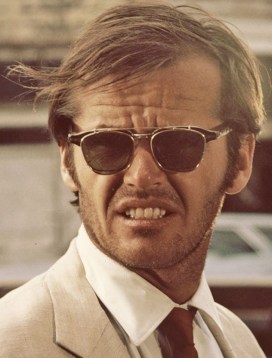
22sunglassespostJacknicholsoneasyriderJack Nicholson came to my 18th birthday party. And no one spoke with him.

March. 1969.  I was a senior at Marymount High School on Sunset Boulevard, across the street from UCLA.  A screenwriter, dating my sister Diana, was Jack’s best friend. I joked, “Can you invite him?” He believed me. And he delivered.

My parents’ house was on North Rodeo Drive. Fancy address? Yes. Fancy home? Not really. But she had a casual elegance and a hint of New England charm.  There was an invisible sign on our front door: OPEN HOUSE. DOOR UNLOCKED. Always. Inside, six Dudley girls with a steady flow of friends. Night, day, or in some cases, weeks and months. We were the home away from home. A shelter from a personal storm.  The Kardashians had nothing on us. We were the 60’s version with a lot more style and a lot less crass.

Marguerite was the driving force behind the fete. She was, at the time, my best bud. Beautiful, ditzy, a party animal and, tragically, would be dead many years later from alcoholism. I was a tad, but not much less, wild, so we set out to have the biggest bash Beverly Hills could throw. For ME?! I was terribly insecure and shy despite my tough, sarcastic act. Most of my friends were stunningly attractive, from well-known or very wealthy parents. I was going to be, or so I believed, the center of attention for a night. MY NIGHT. I was nervous and sick to my stomach with anticipation.

We ‘manned’ the landlines and started dialing. Fifty calls. Maybe more. And bring a date.

7 OHHH clock. March 21. You know the address. A formal affair. Black tie not optional.

The big day finally arrived. Another perfect first-day-of-Spring evening (and damned if I am ever going to give up March 21 as the vernal equinox).  No room in our circular drive, so a stream of Porsches, Mercedes, MGs, Jeeps, even a stray Volksie, began to line the street. LONG lines. The evening, as they say, had begun.

My buddy Johnny was one of the last to arrive. I asked where he’d been. “I was trying to find a place to park. As I drove around, a great looking blonde pulled up beside me, rolled down her window and asked what was going on. It was Michelle Pfeiffer. I asked her to join me.”  I do not remember if she did. If not, she missed out on one hot dude.

I also don’t remember where my parents were. I’m sure my dad was on another trip around the world filming the light fantastic or a Tahitian tribe.  My mother was probably upstairs and had no idea how much hash and weed was being passed around the pool. Or that her bar was being used to fill up our glasses. Beer was never our drug of choice. Champagne, scotch, vodka or Tequila.

I made my way to the back den and into the middle of the now-crowded, music-blaring, smoke-filled room. My sister tapped me on my bony shoulder.

He’s here!

My freckled face turned the color of my auburn hair.  There he was. In the flesh. Jack Nicholson. I could see him through the crowd, walking toward the dining room. Jeans and a long-sleeved shirt. Rumbled hair. Shades. Guess he didn’t get the dress code memo. Obviously, he didn’t give a shit. The dude was up for an Academy Award for Easy Rider, and I was stuck in quicksand. Couldn’t move.  He pulled up a chair, put his back against the dining room wall, and sat. And sat. For at least an hour or more while people walked by, stared, gawed. Words in their throats. He smiled, the famous JACK grin. Never spoke.

My brother-in-law, Gabriel, a Broadway and film producer, and Dick Donner, a film director of note, stood together in the butler’s pantry smoking cigarettes. I wandered over to join them, and squeezed between their six-foot, five-inch frames. Only then did I feel safe to be a voyeur of the famous face across the room.

“This is the best damn looking group of young people I have ever seen assembled in one room at the same time,” Dick bellowed in his profundo tone.

It took quite a while, but I finally got the guts to walk across the floor and introduce myself. I shook his hand and thanked him for coming. He looked at me and took his sunglasses down to reveal a devilish glint in his eye. Then he flashed a Jackman killer smile and said, “Happy Birthday, Jennifer.”

With that he stood and left.

Had I been less intimidated and naïve, I would have suggested we share a joint or two. And maybe, just maybe, a little more…

After all, I was 18.

Hey, Jack – Today’s my 66th birthday. You’re invited.  Let’s talk.

ON SECOND THOUGHT

Los Angeles.

That’s my answer when someone asks where I am from. But it’s never good enough.

WHERE in Los Angeles?

Shit.

I hedge and lower my usual loud voice to a whisper.

“Beverly Hills.”

“You were born and raised there?! Did you know famous people?”

Never fails. EVER. Nor the feeling I was hatched and landed on an alien nation.

I was, however, born in the Hollywood Good Samaritan Hospital to a stunning mother. And Duke, my multi-talented, manic-depressive, alcoholic,(gave it up for) pill-popping, hard-working, producer, director father, who proudly carried and shared photo’s of his “six beautiful daughter’s.”

And yes. I did, and do, know ‘famous’ people. Friends with whom I went to grammar and high school. Their parents. Many long gone. Some of my dearest friends dead. Painful. Heartbreaking. Suicides. Addictions. Others struggled, recovered, and found the pride of sobriety. Many of us have gone onto to be successful. Very. In and out of the Film or Music “industry.”

This is my avenue for stories of my family and those who were, and continue to be, a part of my life. The life and place I left behind.

The one I abashedly call. Home.